
The neighborhood
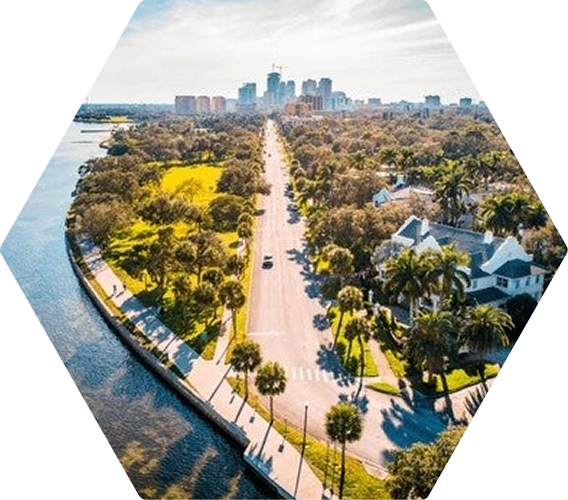
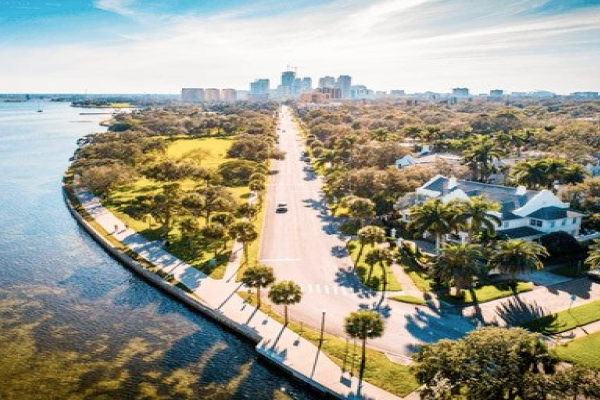
The Historic Old Northeast is St. Petersburg's first established neighborhood, and one of its most beloved. Bordered by Tampa Bay and Coffeepot Bayou, the neighborhood is defined by its walkable brick streets, granite curbs, hexagonal sidewalks, and a near-unbroken canopy of mature oak trees.
Home to approximately 2,500 households, the Old Northeast is as much a way of life as it is a place. Neighbors know each other by name. Front porches are social gathering spaces. And the sense of community that drew people here a century ago is very much alive today.
Designated a landmark on the National Register of Historic Places in 2003, the neighborhood's architectural diversity, from Mediterranean Revival to Craftsman bungalows, reflects the ambition and optimism of early St. Petersburg and founder Perry Snell's vision of a lush, walkable urban neighborhood.
A century in the making
From palmetto scrub to National Historic Landmark, here's how the Old Northeast became the neighborhood it is today
Built in every style imaginable
Old Northeast's architectural diversity reflects over a century of design, from Spanish Revival to English Tudor, all within a few walkable blocks
Colonial Revival
Broad two-story facades with classical columns, side-gabled or hipped roofs, and wood lap siding or brick facades define this style. Look for centered front stoops, flat soffit eaves, and double-hung windows with small rectangular muntins.
Tudor Revival
Popular in the 1920s and 30s, Tudor Revival borrows from English country houses with steep gabled roofs, asymmetrical front-facing gables, brick cladding, and decorative half-timbering details.
Mission Revival
Inspired by California's Spanish colonial missions, this style features smooth stucco walls, curvilinear parapet rooflines capped with barrel-shaped terra cotta tiles, and symmetrically placed double-hung or casement windows.
Prairie
Developed from Frank Lloyd Wright's early work, this style has a horizontal feeling with low-hipped roofs, extended eaves, deep front porches, and symmetrically balanced windows around a central entrance.
Craftsman
A descendant of the English Arts and Crafts Movement, Craftsman homes are typically one to one-and-a-half stories with gable or hipped roofs, exposed rafter ends, deep front porches on tapered wood columns, and brick or stone piers.
Mediterranean Revival
Inspired by Spanish baroque architecture and the 1915 Panama-California Exposition, this style features smooth stucco walls, wrought iron grills, gently sloped barrel tile roofs, arched doorways and windows, and ornately carved stone surrounds.
Find us
The Old Northeast sits along the waterfront in the heart of St. Petersburg, Florida
Explore the neighborhood
See the neighborhood
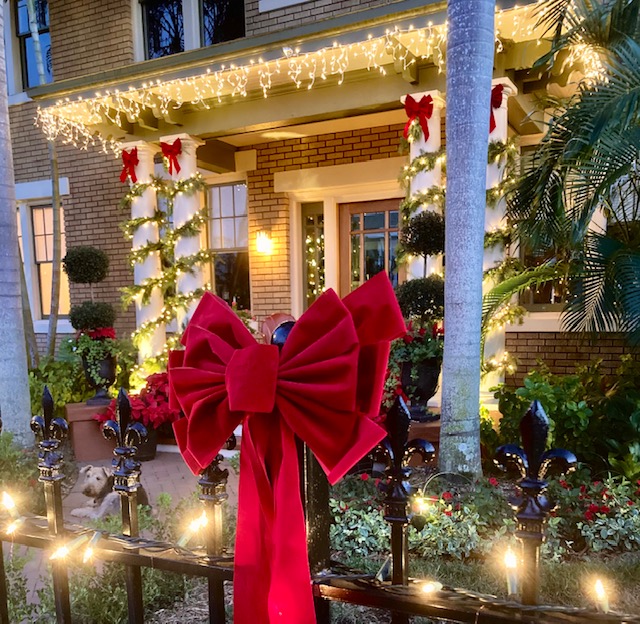
A glimpse of life in Old Northeast
Our neighborhood by the numbers

Upcoming events
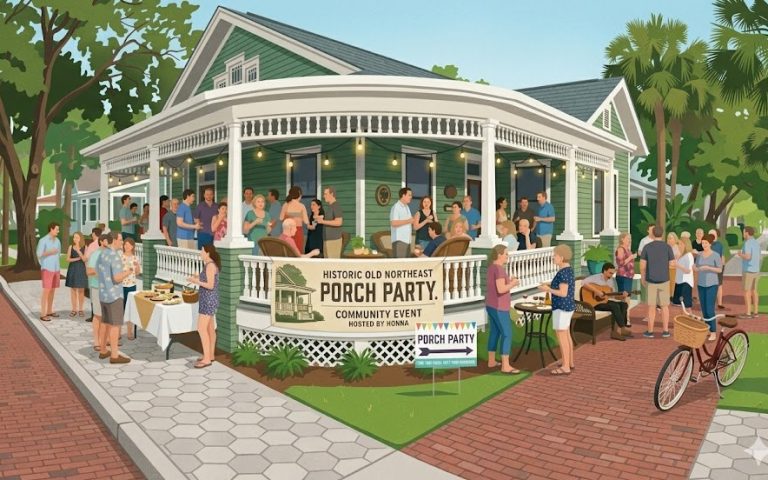
From porch parties to community events, there's always something going on in the neighborhood
View full calendar

This is your neighborhood too
The Old Northeast's tree-lined streets, historic homes, and tight-knit community don't maintain themselves. HONNA members are the people who make sure this neighborhood remains as special as it's always been.